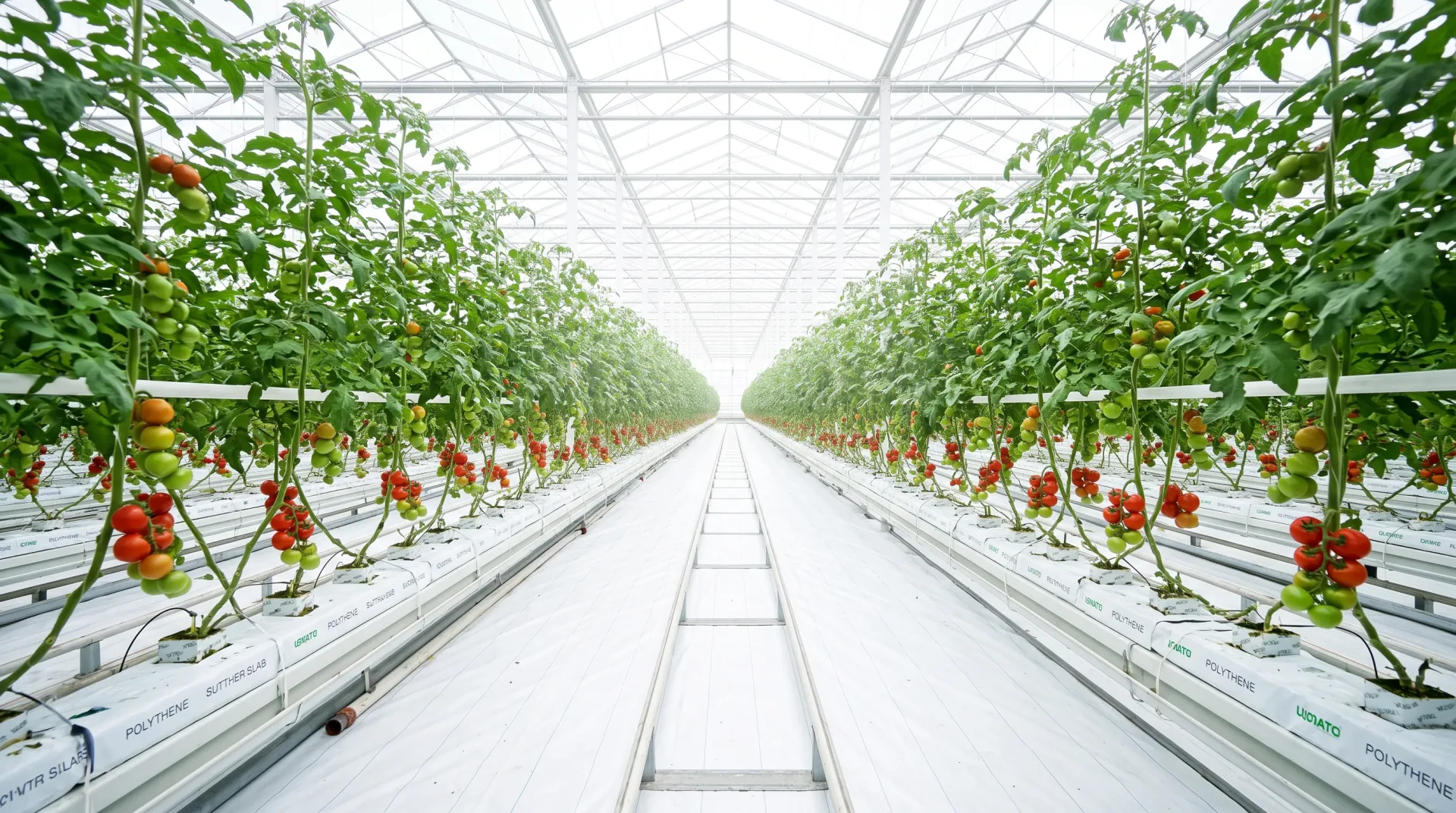
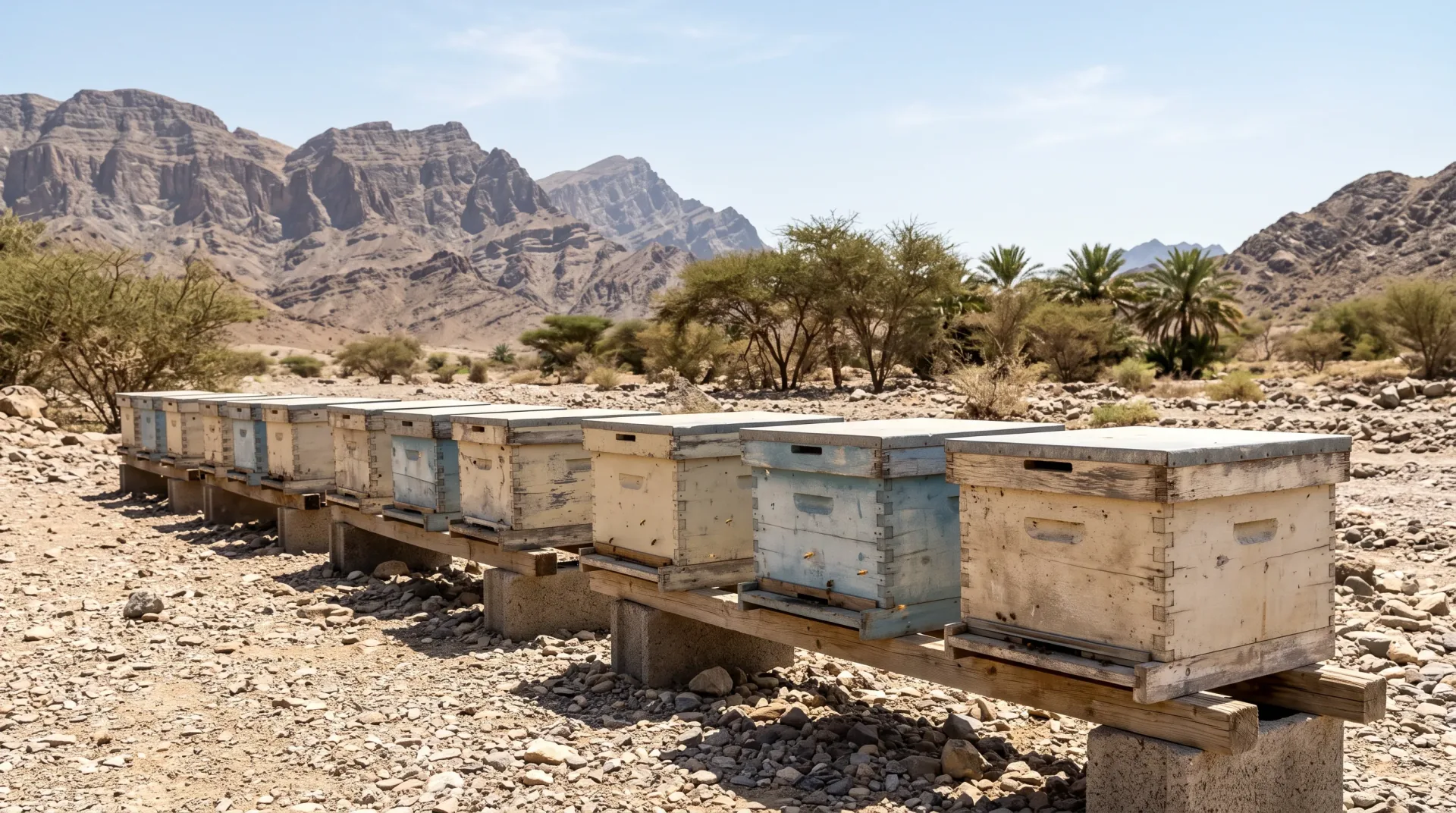
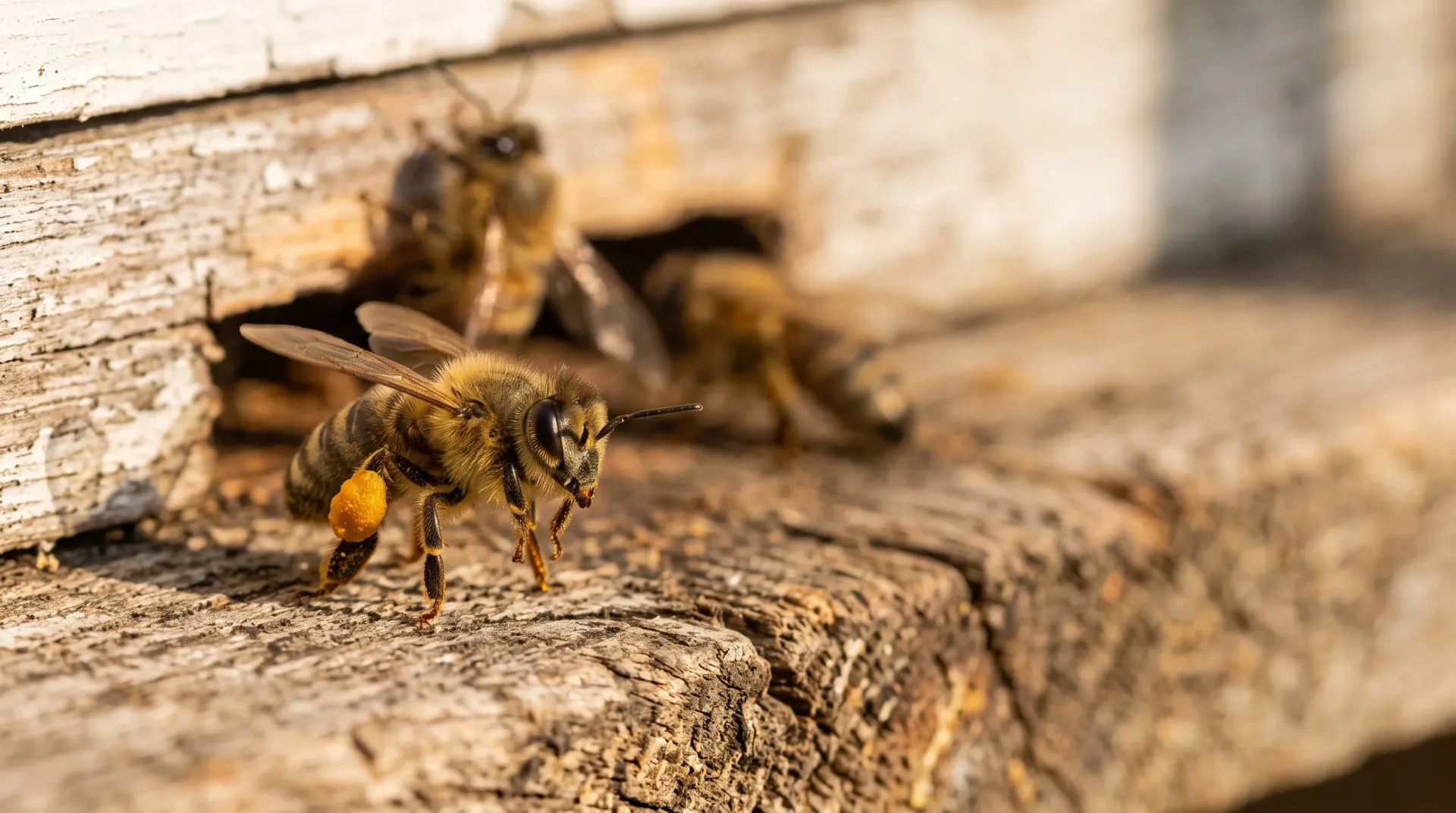
Modern greenhouse with bumblebee hive monitoringHoneybee apiary with entrance monitors in Hatta mountains

Know your pollinators.

Precision IoT monitoring for bumblebees and honeybees — engineered for the world's harshest climates.

Explore the System

14 years of development · Multi-year battery life · Indoor & outdoor

Pollination is agriculture's
most fragile process.

One-third of global food production depends on pollinators. Yet pollination remains the least measured, least controlled input in modern agriculture. Growers invest in irrigation, fertilization, and climate control — but pollination? It's left to chance.

~30%

of food crops depend on animal pollination

40°C+

UAE summer temperatures that stress pollinator colonies

0

visibility most growers have into pollinator activity

Products

Bumblebee and honeybee monitoring. One ecosystem. Every environment.

Bumblebee Counter

Track every flight. Measure pollination as it happens.

Non-intrusive optical counter monitoring bumblebee activity at the hive entrance. Counts incoming and outgoing flights and distinguishes drones from worker bees, helping track colony lifespan and activity patterns. Also measures outside temperature and humidity. Designed for most commonly used bumblebee hives in greenhouse pollination.

  • Optical counting via photodiode array — no vision/ML, no ambiguity
  • Drone vs. worker bee discrimination
  • Outside temperature & humidity sensing (SHT45, ±0.2°C)
  • CR2032 coin cell — 3.8+ year battery life
  • BLE 5.3 Long Range (Coded PHY) for data offload
  • IP65 rated, field-deployable in any climate
nRF52840 · TPS7A02 · TLV3691 · SHT45 · 6.24 µA avg

Honeybee Counter

Monitor apiary health. Know your colonies.

Optical counter mounted on Langstroth and classic hive entrances. Tracks foraging activity and measures outside temperature and humidity. Complemented by in-hive sensors for brood temperature, acoustics, and other parameters — giving beekeepers and researchers real-time visibility into colony strength and health.

  • Optical counting via photodiode array — reliable, low-power
  • Outside temperature & humidity sensing (SHT45, ±0.2°C)
  • In-hive monitoring: brood temperature, acoustics, colony health
  • BLE 5.3 Long Range (Coded PHY) for data offload
  • IP65 rated, designed for outdoor apiary deployment
nRF52840 · TPS7A02 · TLV3691 · SHT45 · in-hive sensors

BLE Gateway

Your field network. Indoor or outdoor.

Collects data from all bee counters within range via BLE Long Range, stores up to 218 days of records locally, and uploads to the cloud via cellular or Ethernet.

Indoor

USB-C powered, Ethernet + WiFi, for greenhouse deployment

Outdoor

Solar + LiPo, cellular (Cat-M1/NB-IoT/2G), for open-field deployment

Both variants share the same firmware core and data protocol — one system, any environment.

ESP32-C6 · BG95-M3 · W25Q128 · TPS63900 · 218-day buffer

Why monitor?

Data turns pollination from a cost center into a managed input.

B

Bumblebee Hives

Delivery verification

Confirm the hive was delivered alive and active. No more relying on visual checks — the counter tells you from the first hour whether the colony is viable.

Extend hive lifespan beyond 8 weeks

Track activity trends over time to identify when a hive is still productive. Many hives are replaced on a fixed schedule — data lets you use them longer, generating substantial savings on replacement costs.

Compare hive productivity

Benchmark performance across hives, batches, and breeding companies. Use objective data to negotiate with suppliers and select the best-performing colonies.

H

Honeybee Hives

Colony health monitoring

Track foraging activity, brood temperature, and acoustics to detect swarming, queen loss, disease, or colony collapse — early, before it's visible.

Apiary management at scale

Monitor dozens or hundreds of hives from a single dashboard. Know which colonies need attention without visiting each one.

Research & breeding insights

High-resolution flight data combined with environmental conditions enables behavioral research, breeding program evaluation, and pollination efficacy studies.

How It Works

Four steps from hive to dashboard.

01

COUNT

Counter

detects every bee pass

6.24 µA avg
02

COLLECT

Gateway

scans counters via BLE

Coded PHY S=8
03

STORE

Gateway

buffers 218 days locally

16 MB flash
04

UPLOAD

Cloud

dashboard & alerts

Cellular / Ethernet

Why Apin

Engineering decisions, not marketing claims.

Multi-year battery life

CR2032 coin cell lasts 3.8+ years. No charging, no solar on the counter. Set it and forget it.

Built for extreme climates

-40°C to +85°C components, IP65 outdoor gateway, solar-powered for off-grid deployment. Tested for UAE conditions.

BLE 5.3 Long Range

Coded PHY (S=8) extends BLE range to 200m+ open field. No WiFi infrastructure needed at the crop.

218 days offline buffer

Gateway stores 262,000+ records in SPI flash. If cellular drops, no data is lost. Circular buffer auto-manages.

One firmware, any deployment

Indoor and outdoor gateways share 80%+ codebase. Consistent data format, same cloud API.

14 years in the making

Designed by an engineer who has spent 14 years building low-power IoT systems. Every component chosen for a reason.

Starting where the challenge
is greatest.

The UAE imports approximately 80–90% of its food. National food security strategies are driving massive investment in controlled-environment agriculture — greenhouses, vertical farms, and protected cultivation. All of these depend on managed pollinators.

But the Arabian Gulf climate is brutal for bees. Summer temperatures exceeding 45°C, extreme humidity (or sudden absence of it), and limited native flora create constant stress on pollinator colonies. If we can monitor and optimize pollination here, we can do it anywhere.

apin.ae is seeking pilot partners

In UAE greenhouse operations, protected agriculture, and open-field apiaries. If you manage pollinators, we should talk.

Get in Touch

Precision is not a feature.
It's a habit.

Over 14 years of designing low-power embedded systems, every component selection in the Apin system has been refined through iteration. The 6.24 µA average current isn't accidental — it's the result of 25 nA regulators, nanoamp comparators, and a power architecture where every microamp is accounted for.

The schematics are published. The power budgets are verifiable. This is engineering you can audit.

Apinae — the bee subfamily that includes both bumblebees and honeybees. Apin is where our name comes from. .ae is the UAE, our home and first deployment.

Power Budget — Bumblebee Counter (daily average)
2.49 µA
idle
0.74 µA
counting
1.53 µA
T&H sensing
1.44 µA
BLE advert
Total: 6.24 µA average
CR2032 → 3.8 years

Let's talk pollination.

Whether you manage a greenhouse, an apiary, or a research station — we'd like to hear from you.

buzz@apin.ae